Showing posts with label Lotus. Show all posts

Friday, April 15, 2011

Lotus Evora

The Lotus Evora is a sports car produced by British car manufacturer Lotus. The car, which was developed under the project name Project Eagle, was launched as the Evora on 22 July 2008 at the British International Motor Show.The Lotus Evora is based on the first all-new vehicle platform from Lotus Cars since the introduction of the Lotus Elise in 1995 (the Exige, introduced in 2000, and the 2006

Wednesday, March 23, 2011

Lotus Exige S 240

The Lotus Exige is a two-door, two-seat sports car made by Lotus Cars. It is essentially a coupé version of the Lotus Elise, which is a roadster that is mid-engined and has been in production since 1996. The original Exige (NA or naturally aspirated Exige) was launched in 2000 and had a 1.8 L Rover K Series engine in VHPD (Very High Performance Derivative) tune. It produced 177 bhp (132 kW; 179

Thursday, March 10, 2011

Lotus Eterne

Lotus made a step forward at this year’s Paris Auto Show with the unveiling of the company’s first hybrid four door super saloon. Called Eterne, the new model will go on sale in early 2015 and will be priced at £120,000 (around $190,000 at the current rates). The 2015 Eterne’s powertrain will combine a 5,0 liter V8 engine with a hybrid gearbox with integrated electric motors and KERS. The total

Thursday, September 23, 2010

2010 Lotus Sports Cars Elite Concept Cars


British sports car company unveil at the Paris Motor Show the sun starts to rise for the dawn of Lotus' new era - the Elite will redefine "modern classic". So here it is, the Lotus Sports Cars Elite, the first taste of what's to come from Lotus in the future. This is not only beautifully elegant, in accordance with the burden of Lotus’ appraises, that car with the center consisting of several by the identical cutting-edge technological innovation Lotus has submitted a bid. Retractile hard top version of the cunning and consumption with optional cross with KERS technology is a special case with Lotus cutting technology to provide perfect performance.
The 2010 Lotus Sports Cars Elite Concept Car is labeled as a “production intent prototype and is scheduled to go on sale in 2014 with a pricetag around £115,000 (approximately $180,000). Set for release in spring 2014, this is an innovative, exciting GT that will set a new benchmark in design, performance and emissions. And it s not all about sleek lines and stunning bodywork with this particular 2+2, what hides beneath this shark like exterior perfectly does the aesthetics justice. A front-mid positioned 5.0l V8 engine delivering up to 620 PS meaning drivers can expect to go from 0-100 km/h in approximately 3.5 to 3.7 seconds.
2010 Lotus Sports Cars Elite Concept Cars
First up, the Elite will offer a retractable hardtop roof, adding significant weight to the automobile. It may weigh in at 3,600 pounds.  This is a far step from Lotus’ usual super-light vehicles mentality. The Elite has a 2+2 seating configuration and is directly aimed at the competing with the Ferrari 612.
"Make no mistake, there's a definite market requirement for the Elite - it's the ultimate sports car feel with comfort and space. There will always be those who believe that Lotus should stick to small sports cars but we didn't take the decision to design something like the Elite lightly, it's based on months of careful research and planning. It's worth noting this sector has been very successful for us in the past and now the Elite raises the benchmark higher still." As for the new, awesome design of the car, the designer Donato Coco has designed what can only be described as a truly stunning car. It is completely different from all Lotus models of the past and really indicates that Lotus is ready to move from the ‘affordable’ sports car market deep into supercar territory.
With the likes of Porsche, Aston Martin and Ferrari in its crosshairs, it’s not surprising that the new Lotus Elite sports car is significantly heavier and more powerful than the company’s current offerings. In fact, with an expected kerb weight of 3,637 pounds, the Elite is very different to Lotus’ usual assortment of light weight track cars but its designers are confident it will still have the ultimate sports car feel--just with a little more comfort and space. The design, specification and performance figures for all Production Intent Prototypes will be confirmed following official testing and will be available from Lotus Cars.

2010 Lotus Sports Cars Elite Concept Cars


British sports car company unveil at the Paris Motor Show the sun starts to rise for the dawn of Lotus' new era - the Elite will redefine "modern classic". So here it is, the Lotus Sports Cars Elite, the first taste of what's to come from Lotus in the future. This is not only beautifully elegant, in accordance with the burden of Lotus’ appraises, that car with the center consisting of several by the identical cutting-edge technological innovation Lotus has submitted a bid. Retractile hard top version of the cunning and consumption with optional cross with KERS technology is a special case with Lotus cutting technology to provide perfect performance.
The 2010 Lotus Sports Cars Elite Concept Car is labeled as a “production intent prototype and is scheduled to go on sale in 2014 with a pricetag around £115,000 (approximately $180,000). Set for release in spring 2014, this is an innovative, exciting GT that will set a new benchmark in design, performance and emissions. And it s not all about sleek lines and stunning bodywork with this particular 2+2, what hides beneath this shark like exterior perfectly does the aesthetics justice. A front-mid positioned 5.0l V8 engine delivering up to 620 PS meaning drivers can expect to go from 0-100 km/h in approximately 3.5 to 3.7 seconds.
2010 Lotus Sports Cars Elite Concept Cars
First up, the Elite will offer a retractable hardtop roof, adding significant weight to the automobile. It may weigh in at 3,600 pounds.  This is a far step from Lotus’ usual super-light vehicles mentality. The Elite has a 2+2 seating configuration and is directly aimed at the competing with the Ferrari 612.
"Make no mistake, there's a definite market requirement for the Elite - it's the ultimate sports car feel with comfort and space. There will always be those who believe that Lotus should stick to small sports cars but we didn't take the decision to design something like the Elite lightly, it's based on months of careful research and planning. It's worth noting this sector has been very successful for us in the past and now the Elite raises the benchmark higher still." As for the new, awesome design of the car, the designer Donato Coco has designed what can only be described as a truly stunning car. It is completely different from all Lotus models of the past and really indicates that Lotus is ready to move from the ‘affordable’ sports car market deep into supercar territory.
With the likes of Porsche, Aston Martin and Ferrari in its crosshairs, it’s not surprising that the new Lotus Elite sports car is significantly heavier and more powerful than the company’s current offerings. In fact, with an expected kerb weight of 3,637 pounds, the Elite is very different to Lotus’ usual assortment of light weight track cars but its designers are confident it will still have the ultimate sports car feel--just with a little more comfort and space. The design, specification and performance figures for all Production Intent Prototypes will be confirmed following official testing and will be available from Lotus Cars.

Tuesday, August 17, 2010

top lotus evora

The Lotus Evora is a sports car produced by British car manufacturer Lotus. The car, which was developed under the project name Project Eagle, was launched as the Evora on 22 July 2008 at the British International Motor Show.

lotus evoralotus evora
lotus evora2010 lotus evora
lotus evoralotus evora image

Lotus Exige Amazingly

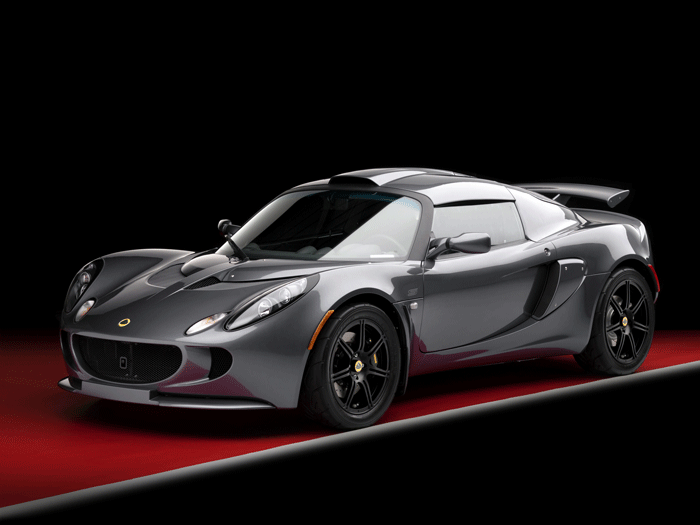
The Lotus Exige is a two-door, two-seat sports car made by Lotus Cars. It is essentially a coupé version of the Lotus Elise, which is a roadster that is mid-engined and has been in production since 1996.

The original Exige (NA or naturally aspirated Exige) was launched in 2000 and had a 1.8 L Rover K Series engine in VHPD (Very High Performance Derivative) tune. It produced 177 bhp (132 kW; 179 PS) in standard form and 192 bhp (143 kW; 195 PS) in the "track spec" version.

In 2004, the Series 2 Exige was introduced. It features a 1.8 L 16-valve DOHC Toyota/Yamaha engine that produces 190 bhp (142 kW; 193 PS) with the Toyota engine designation of 2ZZ-GE. Compared to the Series 2 Elise, it has a front splitter, fibreglass hardtop roof with roof scoop, rear engine cover, and rear spoiler. The sole purpose of these aerodynamic additions to the base Elise is to create more downforce (almost 100 lb (45 kg) of downforce at 100 mph (160 km/h) in the Exige versus 13 lb (5.9 kg) at 100 mph (160 km/h) in the Elise).

Lotus ExigeLotus Exige
Lotus ExigeLotus Exige pic
Lotus ExigeLotus Exige images
Lotus ExigeLotus Exige gallery
Lotus ExigeLotus Exige sports cars

Lotus Esprit Pictures Gallery

The Lotus Esprit is a sports car that was built by Lotus in the United Kingdom from 1976 to 2004. The silver Italdesign concept that eventually became the Esprit was unveiled at the Turin Motor Show in 1972, and was a development of a stretched Lotus Europa chassis. It was among the first of designer Giorgetto Giugiaro's polygonal "folded paper" designs. Originally, the name Kiwi was proposed, but in keeping with the 'E...' naming format of Lotus tradition, the name became Esprit.

lotus esprit2009 lotus esprit
lotus espritlotus esprit 2002
lotus espritlotus esprit image
lotus espritlotus esprit car

Lotus Elise dreem cars

The Lotus Elise is a two seat, rear-wheel drive, mid-engined roadster conceived in early 1994 and released in September 1996 by the English manufacturer Lotus Cars. The car has a hand-finished fibreglass body shell atop its bonded extruded aluminium chassis that provides a rigid platform for the suspension, while keeping weight and production costs to a minimum. The roadster is capable of speeds up to 240 km/h (150 mph). The Elise was named after Elisa, the granddaughter of Romano Artioli who was chairman of Lotus at the time of the car's launch.

lotus elise2008 Lotus Elise interior
lotus eliselotus elise
lotus eliselotus elise pics
lotus eliselotus elise sc

Lotus Cars Pictures Wallpapers

Lotus Cars is a British manufacturer of sports and racing cars based at Hethel, Norfolk, England on the former site of RAF Hethel, a World War II airfield. The company designs and builds race and production automobiles of light weight and high handling characteristics.

Lotus is currently owned by Proton, the Malaysian carmaker, who took over in 1994 on the bankruptcy of former owner Bugatti.

Lotus CarsLotus Cars
Lotus Cars2008 Lotus Cars
Lotus CarsLotus Sports Cars
Lotus CarsLotus Cars
Lotus CarsLotus Cars image
Lotus CarsLotus Cars gallery

Friday, May 14, 2010

Lotus Elise

Origem: Wikipédia, a enciclopédia livre.

Lotus Elise
Lotuselise.jpg
Construtor: Lotus
Produção: 1995-2007
Antecessor: Lotus Elan
Tipo de Carroçaria: roadster
Motor: 1.8 4L
Modelos relacionados: Lotus Exige

O Elise é um roadster compacto da Lotus. O Lotus Elise mantém sua agilidade, confirmando sua fama de ser um carro de corrida para as ruas. O modelo 2008 é dotado tem um motor 1.8 16v com 190cv de potência. Para o mercado americano este motor é produzido pela japonesa Toyota em parceria com sua conterrânea Yamaha. Já para outros mercados, o propulsor de 156 cv é feito pela inglesa Rover.

Outra característica que contribui para a agilidade do esportivo é o peso de apenas 903 kg. O Elise faz de 0-100 km/h em 4,6 segundos e sua aerodinâmica gera 42 kg de downforce a 160 km/h.

O modelo 2008 do esportivo traz novidades no painel de instrumentos - um tela de LCD de alta definição, com mais funcionalidades e novo desenho. E, a partir de agora, todas as versões do Elise vão contar com airbag tanto para motorista quanto para passageiro.

Fabricantes diferentes têm abordagens diferentes no que diz respeito a projetar um carro de alto desempenho. Para alguns, é uma eterna busca por mais potência, com motores maiores, mais cilindros e combustível de alta octanagem. Alguns partem para a tecnologia da era espacial e adicionam os turbocompressores mais recentes, aerodinâmica testada em túneis aerodinâmicos e componentes de suspensão computadorizados.

Para a fabricante britânica Lotus (em inglês), alto desempenho está na simplicidade. Um carro leve, sem acessórios, com um motor modesto é o ideal da Lotus - o carro esporte puro. O novo Lotus Elise se encaixa perfeitamente nesse perfil. Pesa menos de uma tonelada e tem um motor de quatro cilindros, mas é rápido o suficiente para a maioria das pessoas e tem características de condução que algumas revistas especializadas em automóveis chamaram de "telepáticas".

O Elise já é vendido na Europa há alguns anos (como o Elise 111R), mas o Lotus Elise 2005 marca a volta da empresa ao mercado norte-americano. Neste artigo, descobriremos como fizeram o Elise ficar tão leve, e por que é tão gostoso dirigi-lo.

Desde 1996 a Lotus Cars Ltd. pertence à Proton, da Malásia. O motor do Elise é totalmente diferente de alguns dos potentes motores dos atuais supercarros europeus. O motor fabricado pela Toyota substitui o Rover K-Series (em inglês) que equipou o Elise na Europa, de certa forma desatualizado. O motor de aspiração atmosférica de 1,8 litro, refrigerado a água, tem bloco de alumínio de quatro cilindros com duplo comando de válvulas, quatro válvulas por cilindro e uma taxa de compressão de 11,5:1. O motor fica no meio do carro, bem atrás do motorista.Este motor é semelhante ao do Toyota Celica GT-S, mas com os sistemas de admissão e escape atualizados e uma unidade eletrônica de controle (ECU) mapeada especificamente para o Lotus (revista Road and Track, agosto de 2004). São 192 cv de potência a 7.800 rpm, produzindo torque de 19 kgfm a 6.800 rpm. Se você comparar com as Ferrari ou os Corvette, esses números parecerão muito baixos. Mas tenha em mente que o Lotus não foi feito para ser veloz, mas para ser ágil. O Elise vem equipado com o variador de fase e levantamento de válvulas (VVTi) da Toyota. Isso permite ao motor mudar para um ressaldo de perfil diferente no comando de válvulas quando é detectada uma rotação alta. Para simplificar, isso faz o motor desenvolver potência extra quando ele atinge 6.200 rpm. Tanto a revista Motor Trend (em inglês), quanto a Road & Track (em inglês) dizem que o sistema foi aperfeiçoado para proporcionar uma transição mais suave para o perfil de ressalto de alta rotação do que nos motores anteriores da Toyota. O motor é acoplado a um câmbio manual de seis marchas curta com relações próximas (também da Toyota), projetado para permitir trocas de marcha rápidas conforme a potência é transferida para as rodas traseiras. Uma luz no painel mostra ao motorista quando a rotação está se aproximando da linha vermelha, que no Elise é de 8.000 rpm, momento de trocar de marcha. O baixo peso do Elise é conseguido por meio de vários métodos. Começa pelo chassi, de alumínio. Formado por chapas de alumínio coladas, formando uma "banheira", o chassi do Elise pesa somente 68 kg. O peso do Elise é reduzido ainda mais pelo uso do leve plástico reforçado com fibra de carbono em partes do assoalho Além disso, o Elise é um carro muito pequeno - um roadster de dois lugares e apenas um pequeno espaço para bagagem. A curta distância entre eixos (230 cm) também mantém o perfil do carro mais limpo e compacto, e o Elise básico tem capota de lona. Por fim, a Lotus mantém o peso do Elise mais baixo ao cortar muitos dos itens de conforto considerados obrigatórios em um carro caro. Vamos discutir o interior do Elise mais adiante, mas por hora basta dizer que o interior deste carro é espartano. Muito da estrutura de alumínio é deixada à mostra, e os painéis interiores têm furos grandes, para diminuir ainda mais o peso. Rapidez Todo mundo que já teve o prazer de dirigir um Elise percebeu como ele é bom de dirigir. O carro é bem rápido nas curvas e tem ótima resposta de direção. Como a Lotus conseguiu produzir um carro tão bom de curva? Na verdade, não existe nada de especial - apenas uma suspensão independente de braços triangulares duplos superpostos, com molas e amortecedores e barras estabilizadoras de boa especificação (exatamente qual tipo vai depender de você optar pelo kit de série ou Sport), tudo calibrado pelos experts da Lotus.

Como o Elise não foi feito para atingir velocidades muito altas, a Lotus não se preocupou muito com a aerodinâmica. Com velocidade máxima de 240 km/h, o formato suave do Elise não é tão aerodinâmico quanto o de alguns dos supercarros europeus. O assoalho foi projetado para reduzir a sustentação, ajudando a manter as rodas traseiras no chão em velocidades mais altas.

Os pneus Yokohama Advan Neova AD07 (em inglês) são
montados em rodas de liga leve de
oito raios na versão básica.
O kit Sport vem com pneus Yokohama A048 LTS definidos
para o Elise e montados em rodas leves. Discos de freio
ventilados nas quatro rodas
com ABS, fazem o Elise passar de 97 km/h a zero
em 32 metros, um recorde da revista
Road & Track (Road & Track, agosto de 2004).